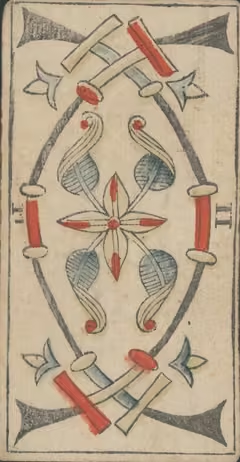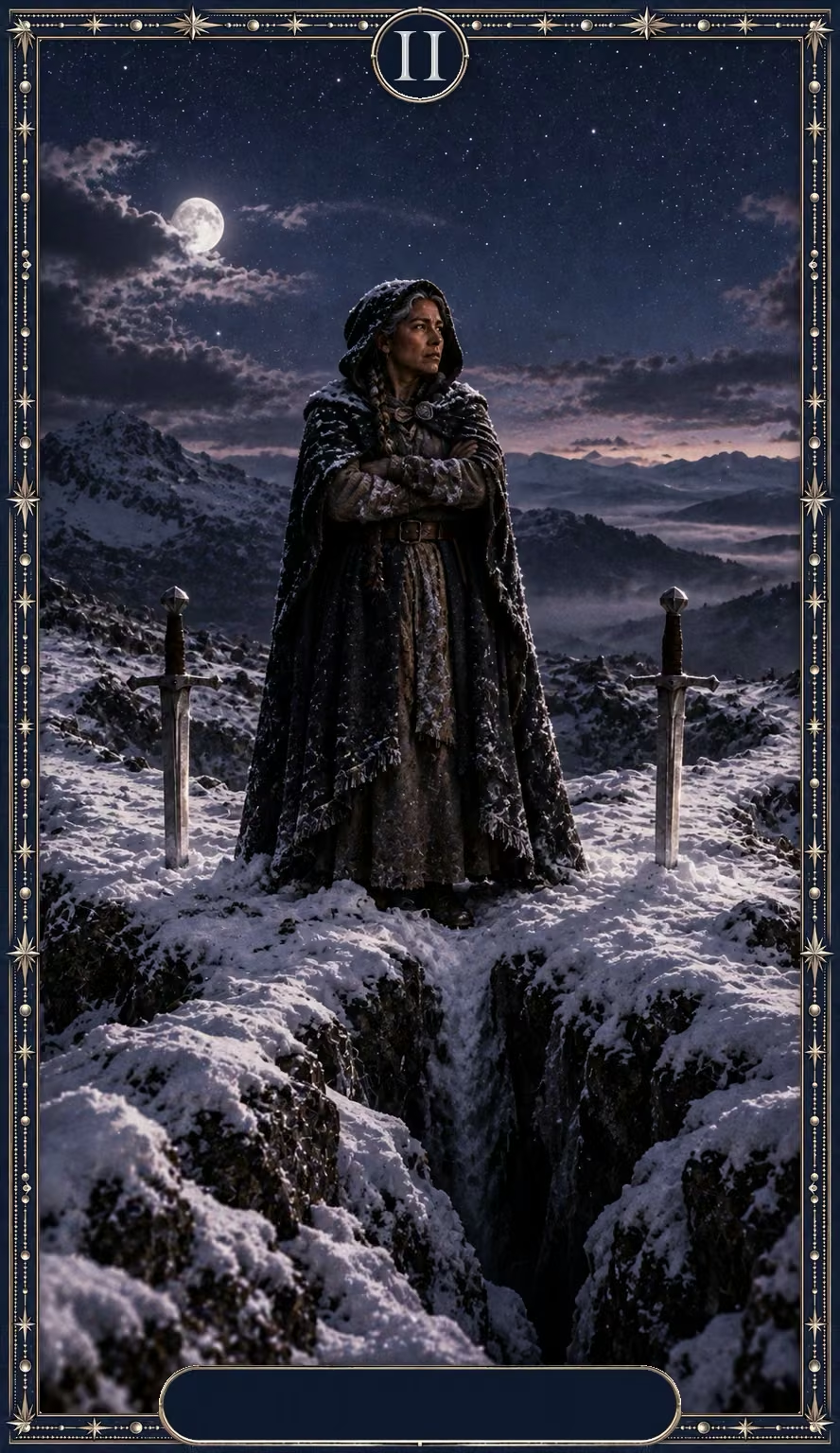
Two of Swords upright
This card speaks of a situation where two points of view, two ideas or two forces are opposed, and where you try to keep peace and balance between them. You suspend hostilities and judgments, and you refuse to take sides. You may be negotiating, or looking for moderation and balance by calming tensions. You may also join with another person for mutual benefit, without lining up on one side. Opposing ideas call for communication and impartial moderation.
The card promises harmony and a success obtained without conflict or fighting, rather passively. It is one of the few Swords cards that announces a rather peaceful climate, since peace reigns in it despite the restlessness that belongs to this suit. This peace remains fragile: the sword is made to act, and the calm here is a pause in a movement that picks up again afterward. For the same reason, the favorable meaning should be read with caution, because Swords are not in general kindly forces in human affairs.
The card also describes a way of managing conflict: you keep at a distance what could hurt you. You close yourself off on purpose so as not to have to choose between friend and enemy, because choosing would bring you back toward other people. Anger and fear hold a precarious balance: one part of you would like to attack, the other would like to hide, and you stay stretched between the two. You may protect your heart while your mind struggles with a dilemma. This defensive stance makes you more prone to outbursts, anger and agitation. Holding back your emotions stiffens the body and shortens the breath, and by trying to stop them you become more emotional.
The traditional meanings are friendship, affection, harmony, tenderness, intimacy, conformity and balance. They also include courage and valor for dangerous times, tension, and an agreement reached between forces that stay on their guard. A quarrel is settled, but tension remains in the relationships, and your acts are sometimes selfish, sometimes selfless. You carry contradictory traits in yourself, a strength that comes from suffering and a pleasure that comes after pain.
Your strengths
- You know how to look for peace, agreement and balance between opposing points of view.
- You know how to stay neutral and negotiate impartially.
- You can help the weaker, and you look for justice and selflessness.
- You keep a certain calm in the midst of agitation.
What holds you back
- You close yourself off so as not to see what could disturb your balance, and you fear being too much influenced.
- You hesitate, you stay ambivalent and you avoid committing, to the point of no longer being able to decide.
- You wait for things to change before acting, which can be procrastination.
- You maintain an uncomfortable peace, made of fear, indecision or the need to conform.
- You protect yourself by pushing others away, and you risk staying shut in your own picture of the world.
- You hold back your emotions, which makes them stronger and makes you more prone to outbursts.
- You can lack tact, ask unimportant questions and talk a lot.
- You can hurt without meaning to, and repeat offenses after being forgiven.
What helps
- Relying on your intuition when ideas clash.
- Recognizing that the peace you have obtained is fragile and not treating it as final.
- Seeking outside help when lowering your guard leaves you raw.
Two of Swords reversed
The upright Two of Swords keeps the peace by refusing to take sides. Reversed, it speaks of breaking that peace and moving into action. Your loyalties may be divided, and this can lead, knowingly or not, to lying and duplicity. You may feel torn and no longer at peace with yourself. You may be resisting a balance of forces, or trying to shake it up. You may want to move out of complacency and surface harmony, and face disturbing issues that call for action. You may be asking yourself whether it is honorable or wise to stir up trouble or break a rule.
Two outcomes exist. Either you unite the opposites into a whole, which gives you inner peace. Or you judge them irreconcilable, and they then become deceptive, like false friends. In everyday life, it may simply mean isolating something unpleasant, such as separating smoking and non-smoking areas. Here, the deadlock of the upright card generally does not apply, but neither does agreement. You take sides, and you may pick the wrong one. You may open your eyes to the truth and discover that you were living with a lie. Whatever the circumstances, deeper truths are likely to emerge soon.
When balance is lost or given up, two cases arise. Either you are overturned by people or problems that force your defenses. Or you give up protecting yourself with your eyes closed, in order to see the truth or to communicate. This second case can be very emotionally charged, even shattering if you do not receive outside help.
What holds you back
- You feel split between two loyalties and may find yourself at odds with yourself.
- You may feel deceived, betrayed or a victim of falseness, or say false things yourself.
- On the defensive, you are more prone to outbursts of anger and hysteria.
- You risk choosing the wrong side.
What helps
Facing what disturbs you instead of keeping it at a distance. Going toward what troubles you, acknowledging what is false in your own attitude. Seeking help from someone outside when the truth shakes you. Choosing between bringing the opposites into a whole and admitting that they are irreconcilable.
What the card shows
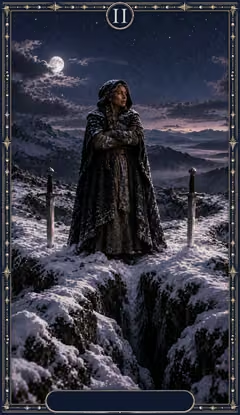
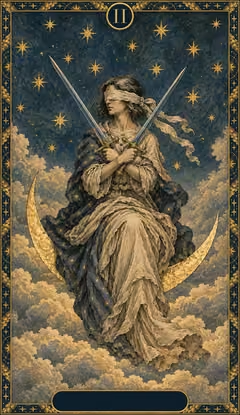
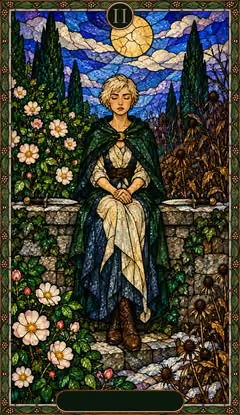
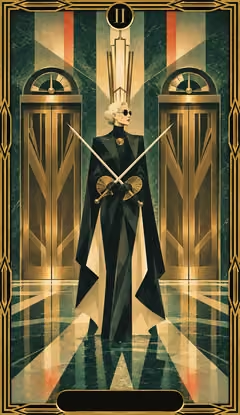
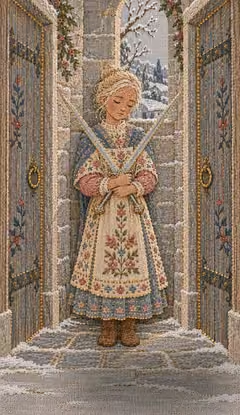
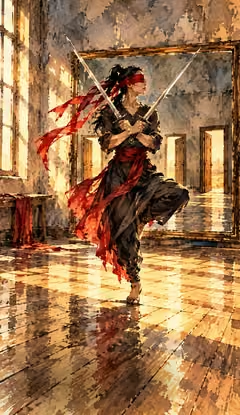
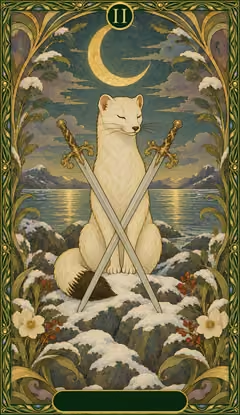
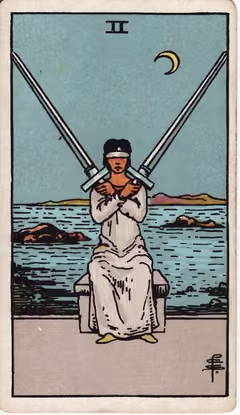
In the most common image, a woman sits on a stone seat, blindfolded, with her arms crossed and a sword in each hand. She has put the blindfold on herself: she has chosen to close her eyes so she does not have to choose between friend and enemy, because choosing would put her back in contact with others. The swords stay ready to strike anyone who comes near. They stand for anger and fear, which form a fragile balance: one wants to attack, the other wants to hide, and the person stays strained between the two. This card shows a way of handling problems or opposition: keeping everything at a distance, thinking nothing can hurt you if nothing comes near you.
The crossed arms close off the heart. Her gray robe blends into the stone seat, which underlines the blocked emotions. The weight of the swords raises the center of gravity from the belly to the chest. When you hold back your emotions, your breathing gets shorter and your body stiffens. The paradox is that by trying to stop emotion, you become more emotional: you think and act from a tense chest, and you no longer see the world but your own image behind the blindfold.
The card resembles the High Priestess, they have the same number and a similar posture. The High Priestess is relaxed, whereas tension dominates the Two of Swords. A veil separates the High Priestess from the waters of the unconscious, while the blindfolded woman has no protection against her pool of agitated emotions. The weight of the swords can tip her into these rough waters. A defensive attitude focuses attention on emotions and makes you more prone to outbursts, anger and hysteria. The card is also close to Justice, whose number reduces to 2: Justice holds a single sword, for a sharpened mind, and wears no blindfold because she prefers complete honesty. The balance of the Two of Swords is lost or given up. Either the person is overturned by the people or problems attacking her defenses. Or she takes off the blindfold to see the truth or to communicate, which can be very emotional, even upsetting, if she gets no outside help.
The image does not match the traditional meaning of friendship that is given to it: it shows isolation and defense instead.
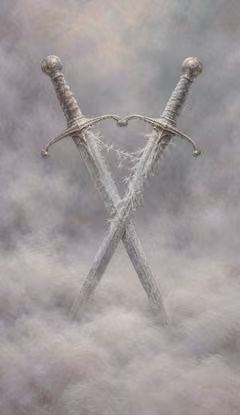
In the version from the esoteric tradition, two hands come out of clouds, on the right and the left, and hold two swords that cross at the center. Where the swords touch, a five-petaled rose gives off white rays. The rose stands for the influence of the Mother, who harmonizes the opposition present by nature in the suit of Swords. The rays form a geometric design that underlines the balance of the symbol. The position of the rose shows that suffering has produced strength.
The Two of Swords nonetheless expresses the best possible idea of this suit: the energy stays above the disturbance. This relative calm is backed by the Moon in Libra: the Moon is change, its nature here is peaceful, and Libra is balance. Because the Moon in Libra judges with balance and weighs every problem fairly, this is one of the few Swords that does not make you sigh when it comes up in a spread. Peace remains, however, a temporary interruption for a sword, whose nature is to fight.
Your strengths
- You look for peace and balance between opposing points of view, without taking sides.
- You are diplomatic and know how to moderate: you can ally with someone for mutual benefit, from an impartial position.
- You show justice and selflessness, and you help the weak.
- You can draw strength from hardship: pleasure comes after pain.
What holds you back
- You keep a fragile balance going, made of false peace or immobility, held in place by fear, indecision or the need to conform.
- You close yourself off so as not to see or know what would upset your balance.
- You fear someone's influence and protect your heart while your mind wrestles with a dilemma.
- You are ambivalent and hesitant, and find it hard to commit and to decide.
- You refuse to choose between friend and enemy, which isolates you from others.
- By defending yourself, you make yourself more prone to outbursts, anger and hysteria.
- Your traits contradict each other: you act sometimes out of selfishness, sometimes out of selflessness.
- You may repeat offenses after being forgiven, or hurt people while meaning well.
What helps
- Communicating and moderating without taking sides when ideas or visions clash.
- Relying on your intuition when your ideas contradict each other.
- Taking off the blindfold to see the truth or to communicate, and accepting outside help if the experience upsets you.
- Remembering that suffering has produced strength, and that the peace that follows comes from that work.