Asteria
press kit
In one sentence
Asteria is an astrology and tarot app for iPhone, written from the reference books and checked against them sentence by sentence: the complete birth chart calculated on the iPhone with the precision of professional astrologers’ software, twenty-nine free tarot decks, the great rituals of the Kabbalah step by step, and readings you can listen to.
Press contact
We usually reply within 2 business days.
- Launch
- Coming soon to the App Store (iPhone). The test version is open right now on TestFlight.
Updated November 6, 2026
The facts
- Platform
- iPhone, iOS 26 and later. Designed for iOS 26: SwiftUI, Liquid Glass, widgets.
- Languages
- English, French, Spanish, Brazilian Portuguese, German and Japanese.
- Price
- free download (today’s reading, complete birth chart, card of the day, yes/no and three-card spreads, two questions a day). Premium as a monthly or annual subscription, with a 7-day trial, or as a one-time lifetime purchase.
- Privacy
- no ads, and nothing follows the reader from one app to another; the birth chart is calculated on the iPhone. Privacy policy.
- Age
- 16 and older.
Visuals free to use when writing about Asteria




Screenshots of version 1.0 and a demo video: available on request now, and on the App Store page as soon as it opens.
What sets it apart
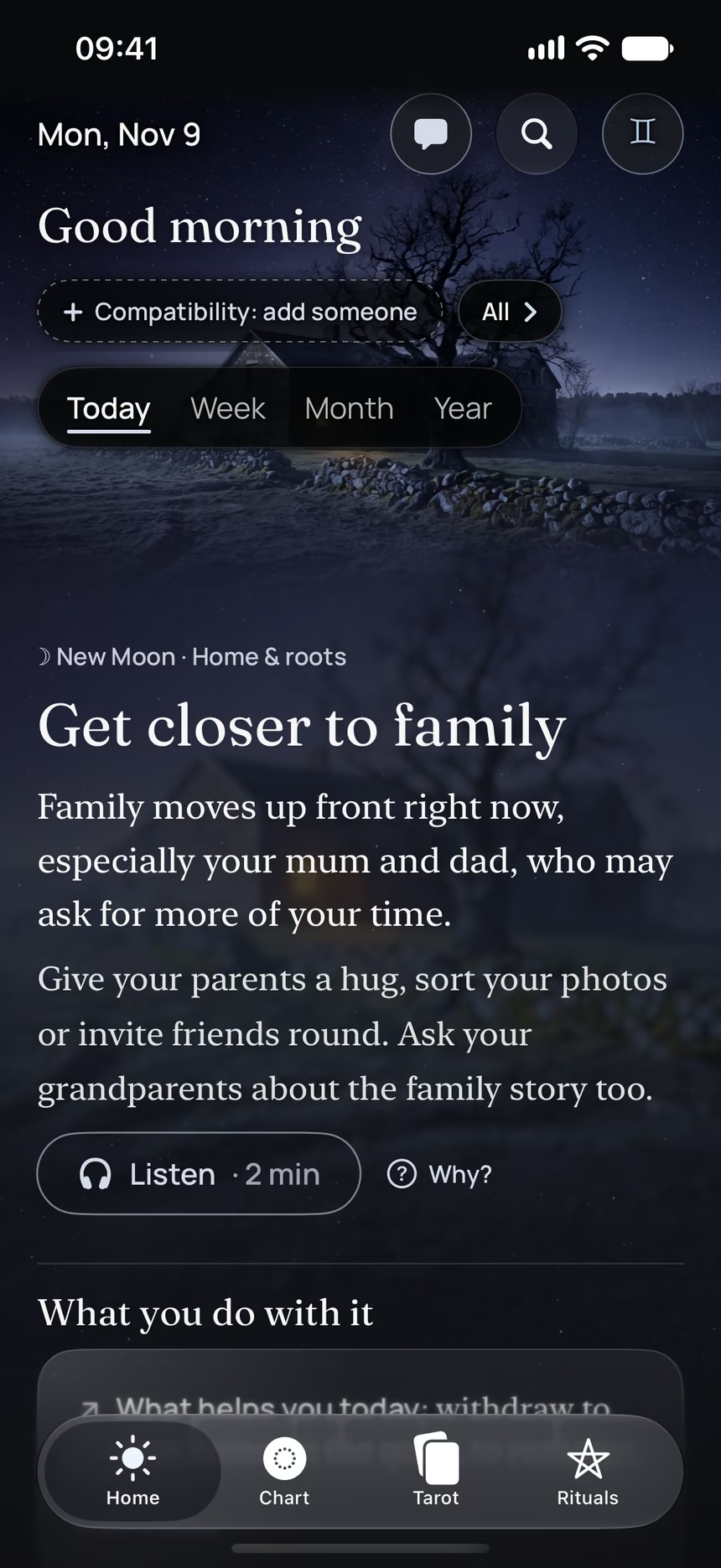
Her day, read from her birth chart.
Every morning, the reading starts from the real sky of that day laid over the person’s birth chart, rather than from a horoscope written for one of the twelve signs. One tap shows what it rests on, and until when.
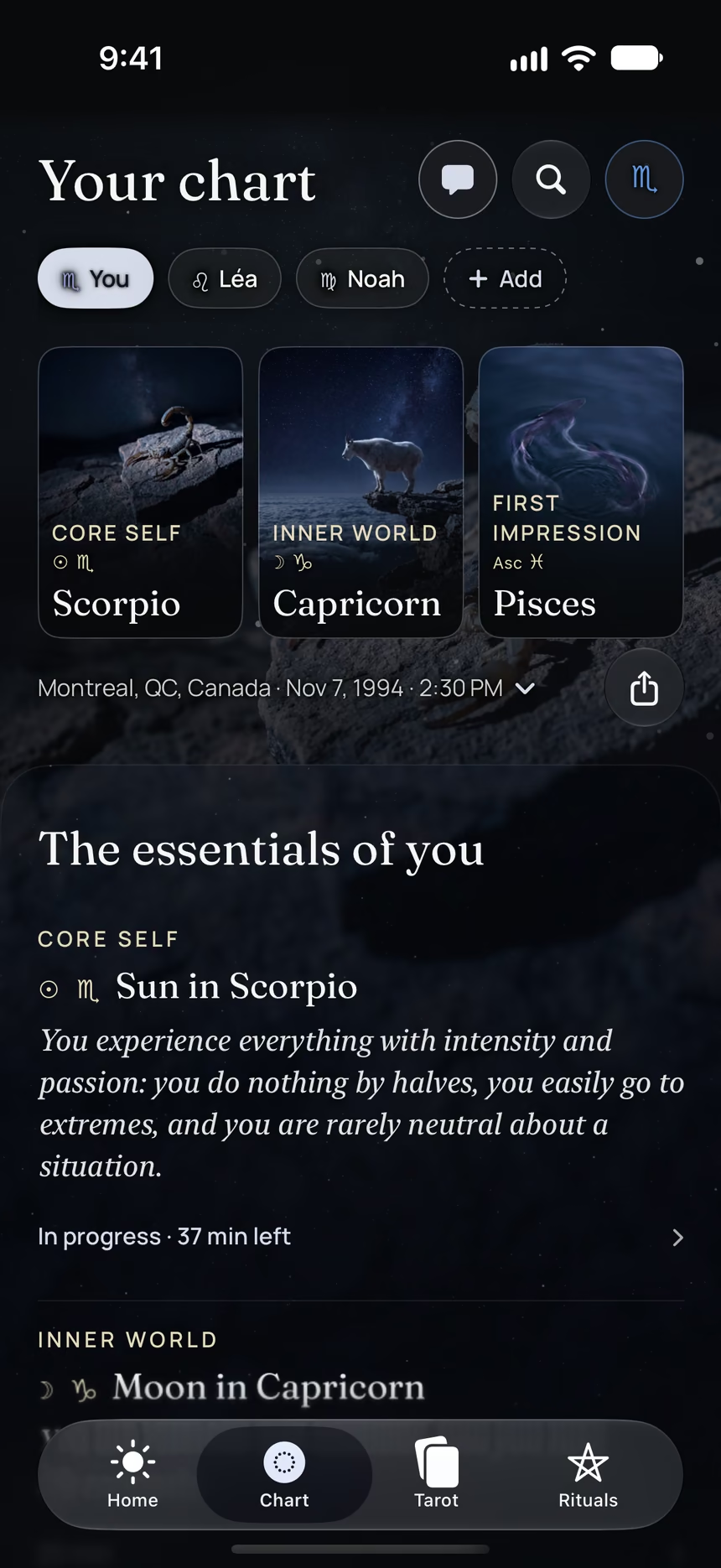
A calculated birth chart, rather than a text per sign.
The complete birth chart is calculated on the phone, then read in plain words: the Sun, the Moon, the Ascendant, love, work, strengths and what holds the person back.
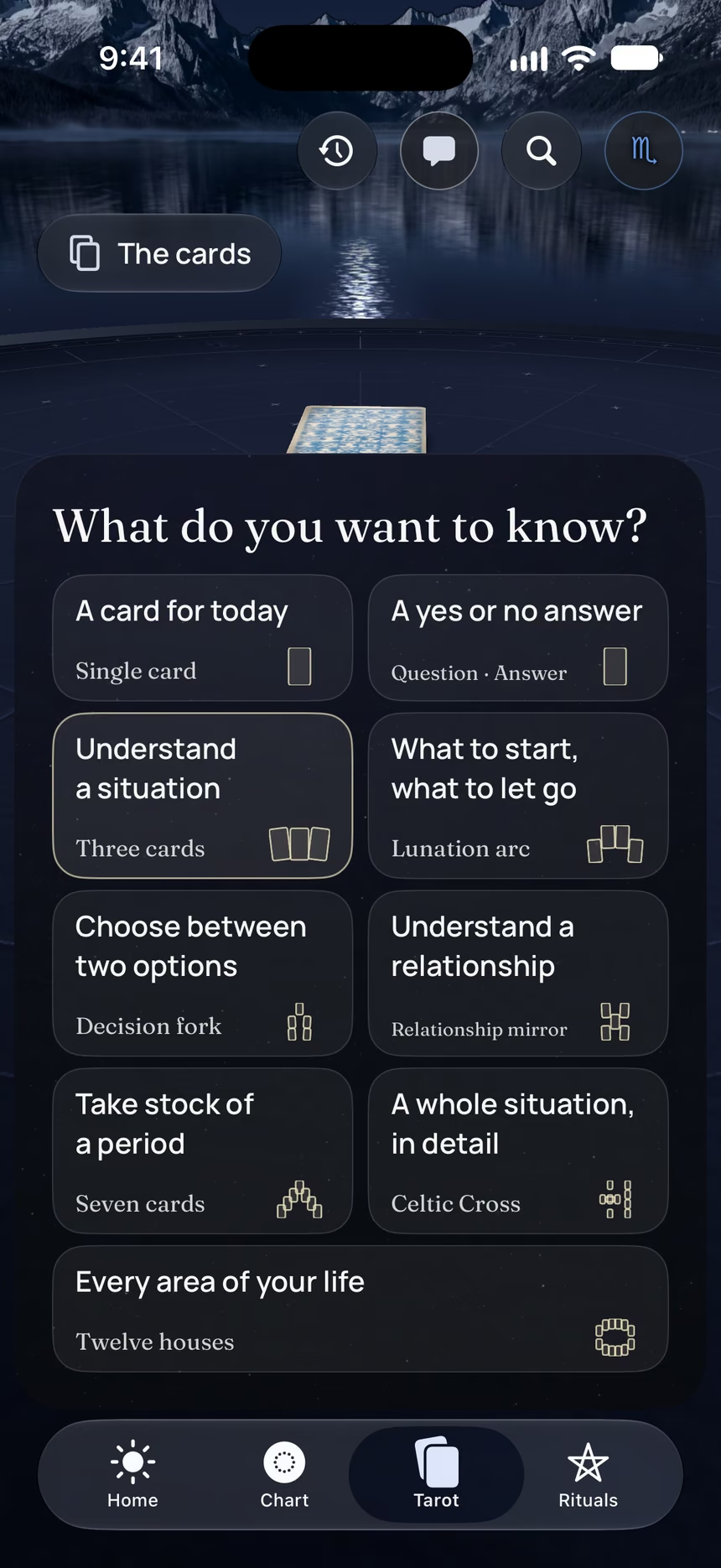
Tarot as a ritual.
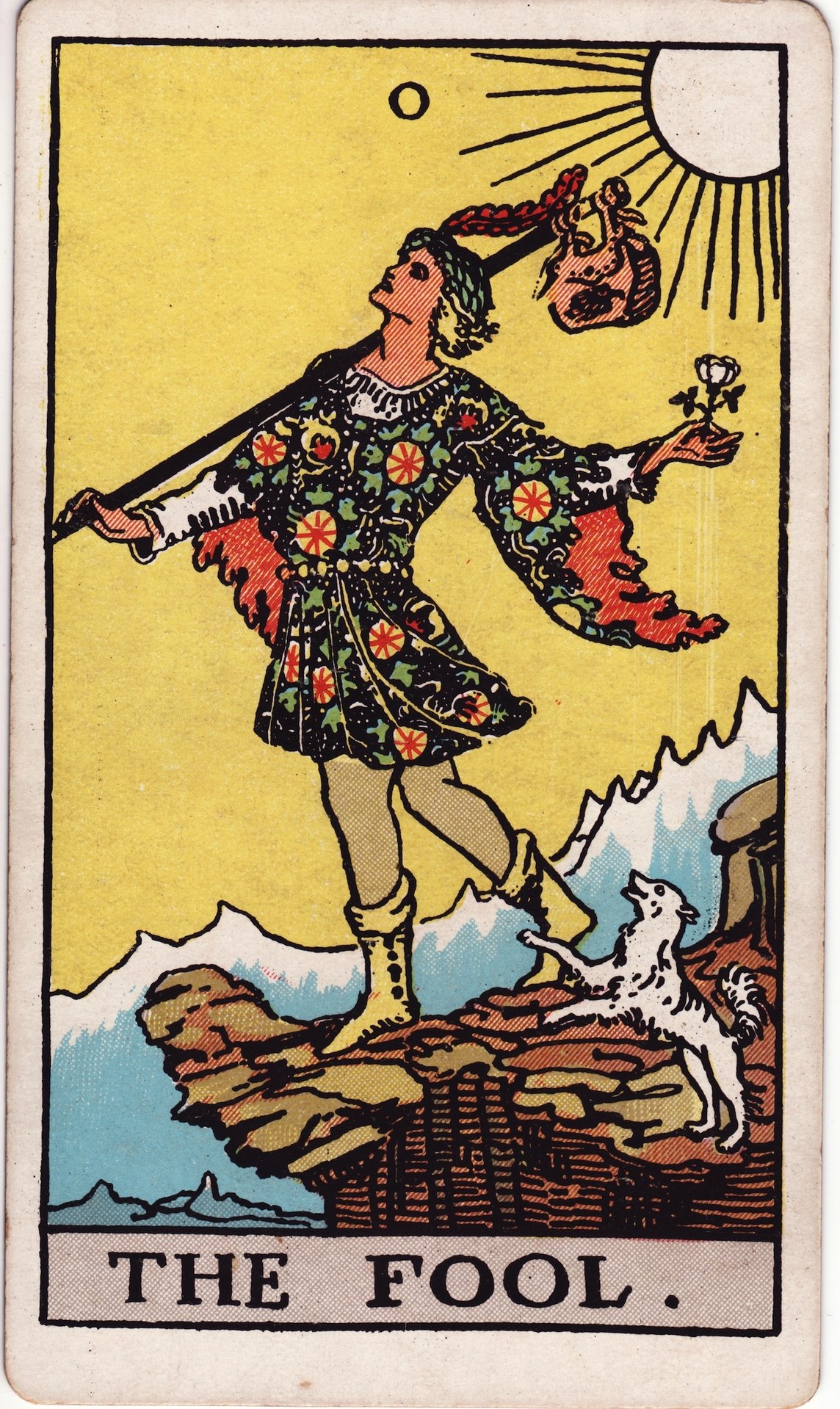
The person shuffles with a fingertip, cuts the deck, and turns her cards over on a table, under the evening sky. Twenty-nine decks, all free: twenty-seven made for Asteria, each in its own material (embroidery, stained glass, 1930s poster art, the 17th-century celestial atlas, nature photography…), and the two historic public-domain decks, the 1909 Waite-Smith and the Marseille deck of Jean-Pierre Payen (1713, Beinecke Library, Yale).
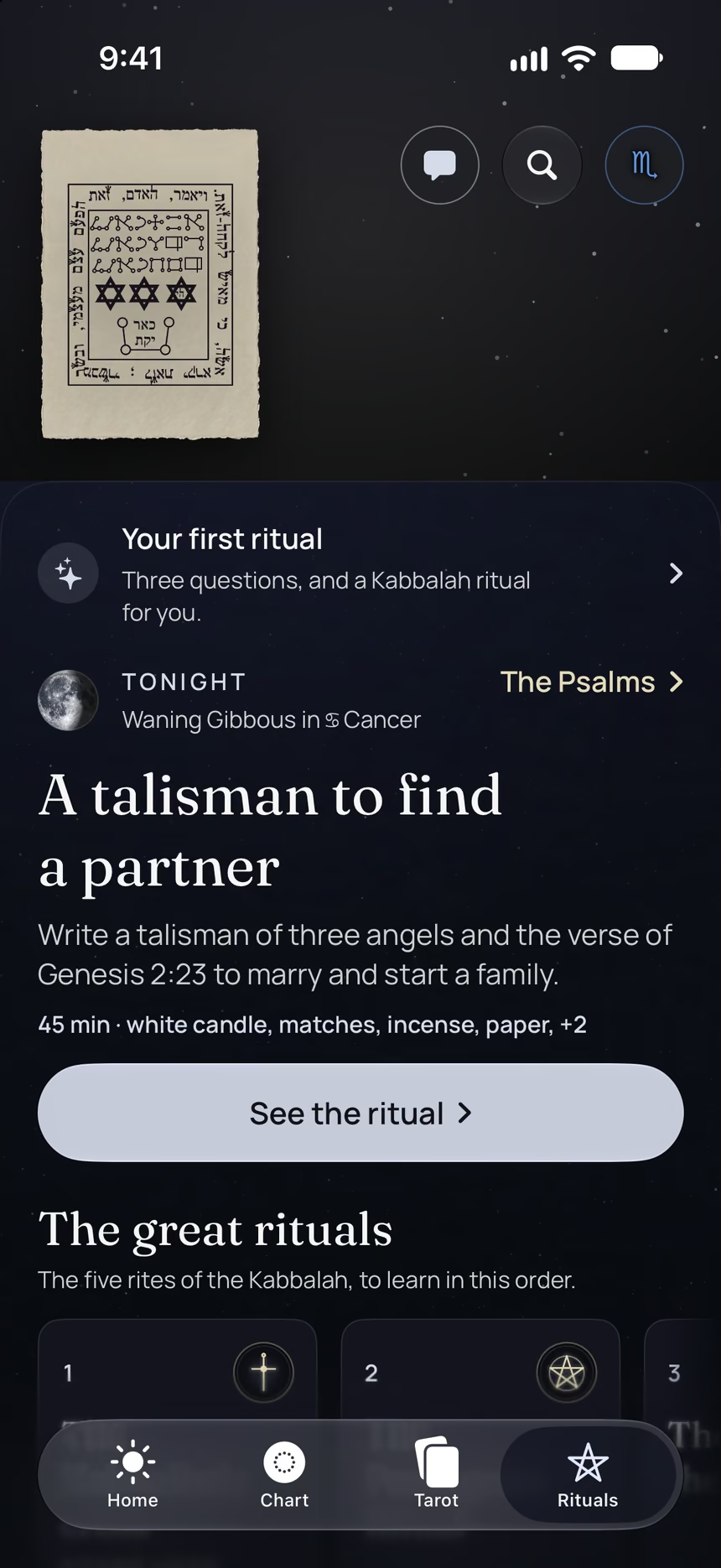
The rituals of the Kabbalah.
The Kabbalistic cross, the pentagram, the elements, the Shield of David and the middle pillar, in the order they are learned, then the talismans, the Psalms and the Hebrew letters, explained to someone who has never seen them.
Try it before launch
The test version is open to journalists: try it on TestFlight (purchases are free there). Premium access is available on request.