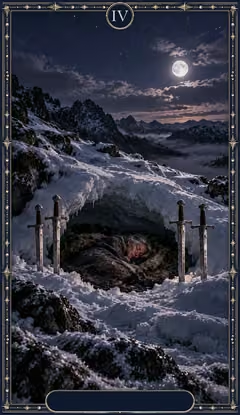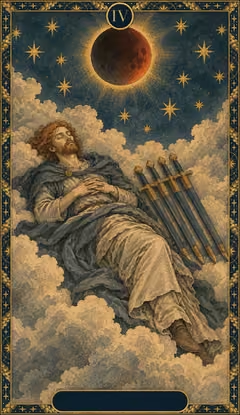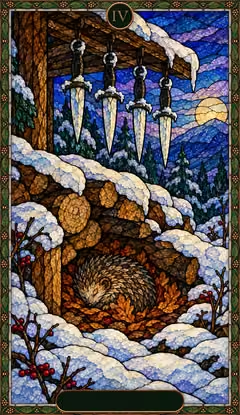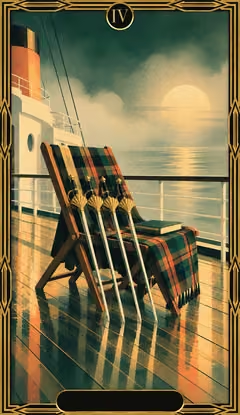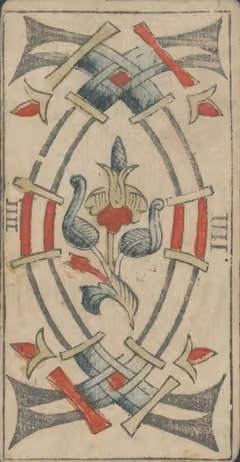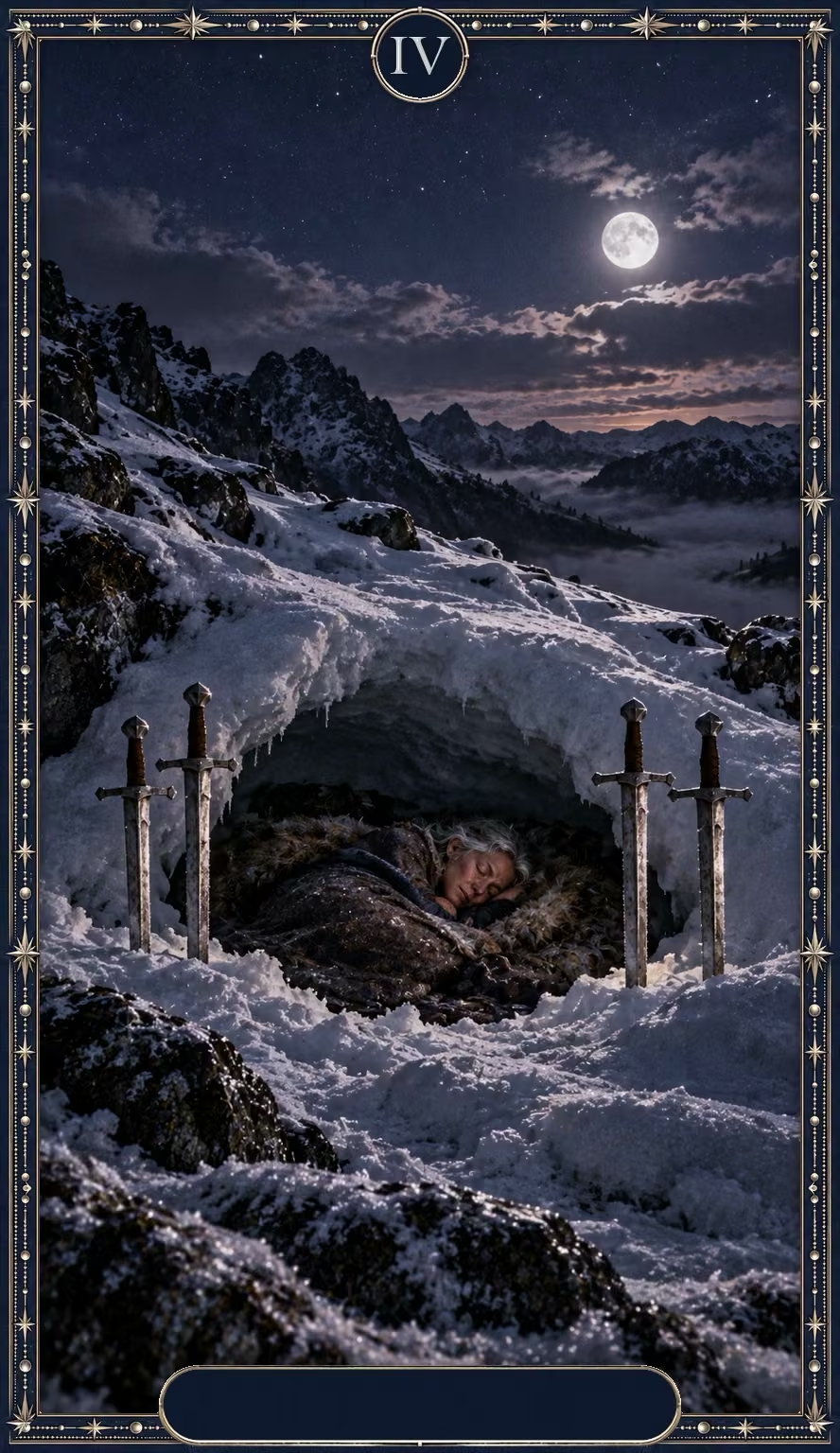
Four of Swords upright
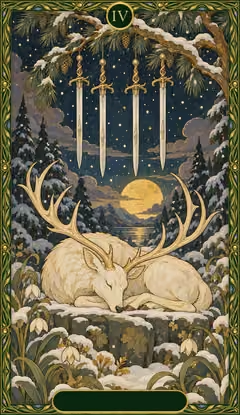
The Four of Swords is the card of rest after struggle. It indicates a time of calm, tranquility and ease that comes after a fight. It speaks of rest after sorrow, and the rest passes through that sorrow. It also speaks of the peace that follows war and of a worry that eases. It announces abundance and the goods of this life, tempered by the dignity of the card. It is also a card of change for the better.
In the Marseille deck, the card indicates, after the struggle, a tendency toward spiritual reflection and a growing understanding of the ideal. In practical life, it marks the start of a project and the slow opening of an awareness.
When the fatigue and tension of the previous cards are not eased, you may withdraw into solitude or sleep to escape grief or to clear your thoughts. You then try to suspend hostilities, to catch your breath after stress, to meditate or to dream. You may also set several subjects aside and let your unconscious work on just one. This period can be a time of observing yourself, in which you note down your thoughts and dreams. It can also take the form of prayer, of asking for advice or help from an authority such as a doctor, a lawyer, a member of the clergy or a spiritual guide. The traditional words for the card are solitude, refuge, vigilance, calm, retreat and respite. The card can also concern retirement from work or pacifism. In a reading about your surroundings, it shows how you react to what is around you: you are in the habit of withdrawing from conflicts with the people around you.
Your strengths
- You know how to withdraw to regain calm after an ordeal.
- You are able to put your thoughts in order and rank your tasks when you are overwhelmed.
- You look for peace and balance, and you know how to suspend a conflict.
- You are able to observe your own thoughts and dreams.
What holds you back
- You pick a mental refuge arbitrarily to escape the disorder of your ideas.
- You stick to convention rather than think through your own problems alone.
- You settle for a compromise, out of laziness or fear of thinking things through.
- You avoid conflicts by withdrawing, instead of facing them.
- You risk shutting yourself into rigid rules and principles.
What helps
- Taking a time of rest and calm after a hardship, without feeling guilty about it.
- Organizing your thoughts and setting your priorities when you feel overwhelmed.
- Writing down your thoughts and dreams to observe yourself.
- Asking a competent person for advice or help.
- Remembering that rest follows sorrow and that a project can begin to take shape in this calm.
Four of Swords reversed
Upright, the Four of Swords speaks of rest, withdrawal and solitude: you isolate yourself to escape grief or to clarify your thoughts. Reversed, it says that this period of calm is coming to an end. You are coming out of a period of sleep or inertia, real or figurative, with more clarity or a different point of view than before. You are in the process of settling the worries that occupied you. You may leave isolation and come back toward other people, or go back to work, or leave a job with no future.
The card also reads in a more cautious way. It speaks of good management, prudence, foresight, thrift and precautions. Through careful attention, serious administration and savings, you can slowly recover from a loss of money or from personal difficulties. It also carries sympathy and harmony.
When you project this card onto others, you may see them as always good, or as frozen in perfection. You may also see them as withdrawn, unable or unwilling to help you. You may finally feel sympathy for someone.
Your strengths
You regain clarity after a period of withdrawal.
What holds you back
- You may feel stuck in a dilemma, or caught in circumstances you cannot get out of.
- You may refuse to ask for advice or to take care of yourself.
- You may see others as frozen, withdrawn or unwilling to help you.
What helps
Asking yourself whether you are refusing help or refusing to take care of yourself. Coming out of isolation and returning to the world when the period of calm is over. Managing your money with caution and thrift to recover from a loss.
What the card shows
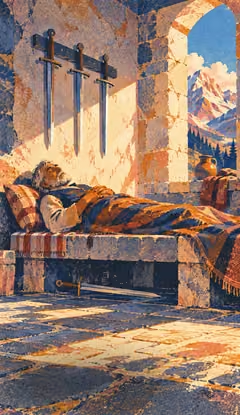
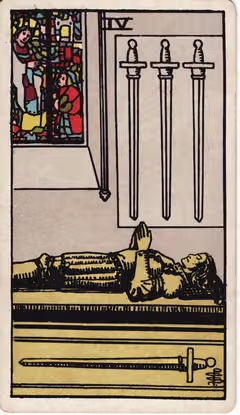
In the Waite-Smith tarot, the image shows a knight stretched out full length on a tomb, in the posture of prayer. He rests inside a church. Three swords hang on the wall above him, and he lies on the fourth.
The stained-glass window shows a person kneeling before a haloed figure, with the word PAX. The word means "peace" and points to a conscience at rest. The window also shows a blessing that heals the kneeling person. This ties the scene to prayer, to asking for counsel and to the help of someone with authority.
The image shows a retreat, not a death. The number Four carries the idea of stabilization, and for the Swords, the suit of sorrow, that means rest or withdrawal. The meaning of the card is therefore vigilance, retreat, solitude and the hermit's rest. It is also read as a pause after the struggle: relief from worry, calm and rest, but after effort.
You may withdraw because you need a break from conflict or stress. You may also do it to clear your thoughts: you isolate yourself, sleep, meditate or dream. The retreat serves to regain strength after a deep wound. It can also serve to avoid fighting before you have a better chance of winning. In that case, your retreat lets you recover.
The card is called Truce, and it is linked with Jupiter in Libra. It shows balance, order and law. Swords are weapons: this truce is a peace kept by the threat of violence, and it does not last long. It also stands for a refuge chosen arbitrarily against the chaos of the mind, and it goes with convention. People who lack the courage to think through their own problems readily take shelter in it.
Your strengths
You know how to withdraw to regain strength. You know how to take a pause after a conflict and calm your thoughts.
What holds you back
- You hide from the world when your aggression stops working or when your mask of confidence becomes too heavy, instead of showing your other side or working with others.
- You isolate yourself or flatten your emotional reactions to protect yourself.
- A withdrawal that goes on cuts you off from the world, and then it takes a force from outside to bring you out of that state.
- You may feel under pressure, because your worries stay hanging over you like the swords on the wall.
What helps
- Withdrawing to regain strength, not to hide.
- Putting your thoughts in order and ranking your tasks by priority when you feel overwhelmed.
- Keeping a journal of your thoughts and dreams.
- Coming back into the world once you have recovered, with more clarity than before.