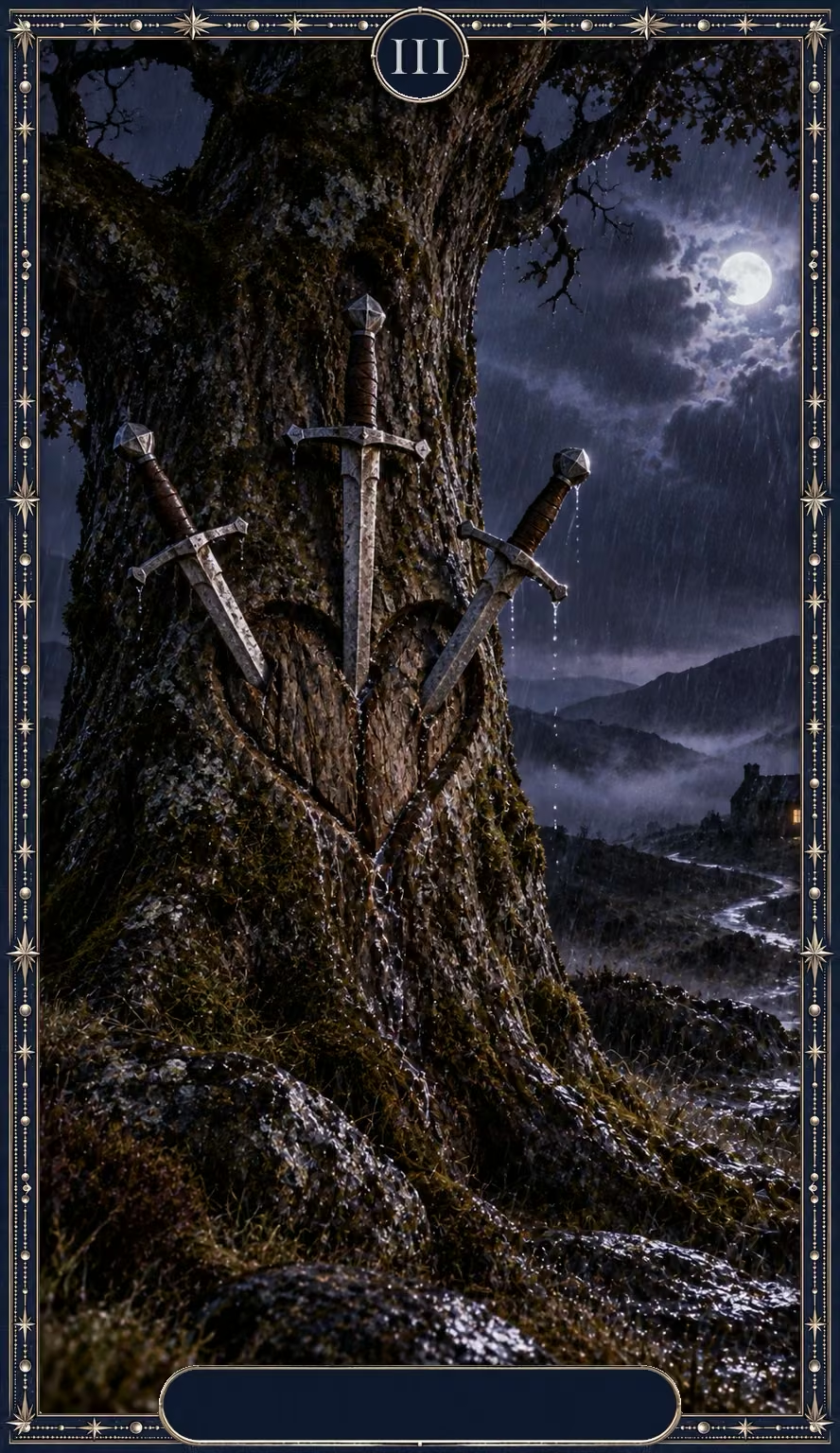
Three of Swords upright
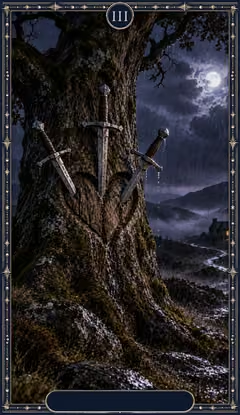
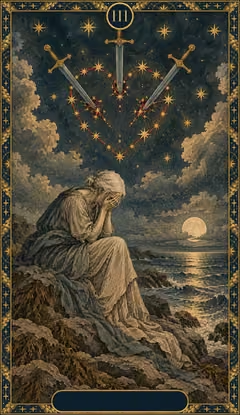
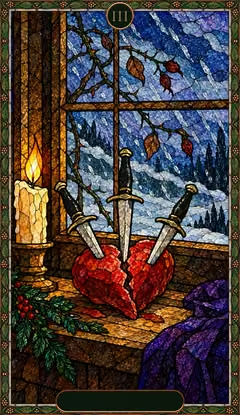
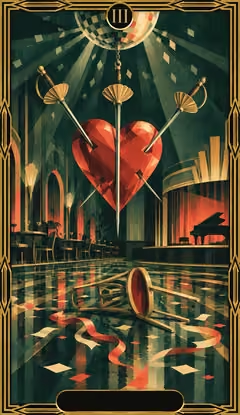
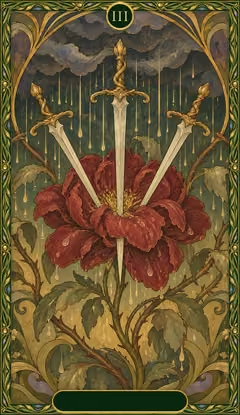
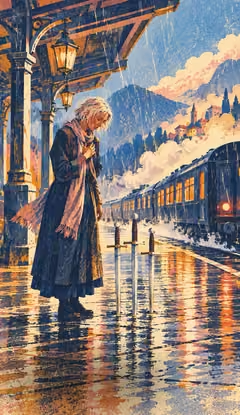
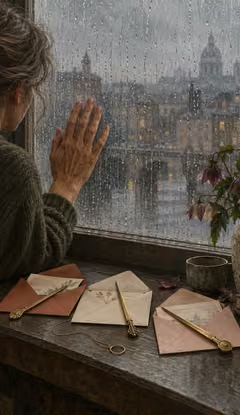
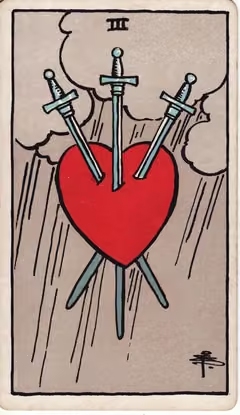
The Three of Swords is the card of sorrow and the wounded heart. It shows three swords piercing a heart, with clouds and rain behind. It speaks of sadness, tears and grief. Among all the Swords, it is the one that says pain and sorrow most simply.
In your situation, this card names distance, absence, delay, division, rupture and dispersion. It also names separation, interruption, quarrel and incompatibility. The attempts at compromise from the previous card have not held, and the mental distress becomes too heavy to carry. It is hard to reconcile the different needs of three people or three ideas, and that is where the sadness comes from. Your heart may want something that your head tells you is impossible. You may feel unhappy and feel sorry for yourself. This card speaks of jealousy, heartbreak, unrequited love, a couple coming apart or an affair that fails. It can also say that your heart is no longer in your work or in a relationship, or that someone has hurt your feelings.
The sorrow of this card is not like an ordinary grief tied to a personal disappointment. It is a wider sadness, a deep melancholy. It is tied to the meaning of division and change. It is nonetheless considered a card of a high level, in which sorrow is a deep state of consciousness that goes beyond reasoning. Despite its sadness, the image keeps a certain calm thanks to the symmetry of the swords.
Your strengths
Your sorrow can become creative: heartbreak inspires many beautiful works and beautiful music. Shared pain creates deep bonds and gives sound ideas. You are honest in money matters, and sometimes generous.
What holds you back
- You can withdraw into self-pity.
- You find it hard to accept a pain that is too great: you push it away, you avoid thinking about it and you avoid everything that recalls it. This attitude keeps it with you and gives it more hold.
- A sorrow you have not accepted, such as the death of someone close, can block your development, even when your situation offers many possibilities.
- You can become scattered, disorganized, or at odds with others.
- Under tension, you can become selfish, say misleading things or sow discord.
- Miscommunication and opposing beliefs can set off tears, accusations and harsh words. Sometimes spite is added to it.
What helps
- Not pushing the pain away: taking it in, accepting it and going beyond it.
- Transforming it with courage and love, so that the sorrow becomes a joyful memory and a way of embracing life.
- Letting yourself cry, because nothing beats a good cry.
Three of Swords reversed
In the first case, you feel relief after a disaster narrowly avoided. Grief begins to withdraw, you can let it go and begin your healing. Old wounds can heal over and the pain can ease. After an argument, you can clear the air and acknowledge your share of responsibility instead of blaming the other person. This card can also signal a commitment to support, among friends or toward a cause or an organization.
In the second case, you carry an inner pain that does not show. You deny your jealousy or your grief, or you refuse to believe a relationship is going badly. This card describes, for example, a person who never cries. When you project this pain onto someone else, you see them as a dramatic person who is always telling their troubles. You may also shut yourself inside a wound that does not heal. You keep going back to it, and in the end it isolates and exhausts you.
This card also describes a pain you push away because it is too strong. You avoid thinking about it and everything that reminds you of it. This attitude keeps the pain with you and strengthens its hold. Healing stalls when you refuse to accept. A grief you never worked through, such as the death of a father, can thus weigh on your whole life and weaken what you build.
Older interpretations associate this card with loneliness, isolation, confusion, disorder and quarrels. They also see in it the feeling of dying of heartbreak or going mad with pain.
Your strengths
You know how to recognize your own responsibility in a conflict. You also know how to commit yourself to support friends or a cause.
What holds you back
- You deny your jealousy or your grief.
- You refuse to see that a relationship has been damaged.
- You blame others for your difficulties without looking at your own part.
- You push the pain away and avoid everything that reminds you of it, which keeps it in place.
- You keep returning to the same wound until you isolate yourself.
What helps
Letting the grief go and entering healing. Accepting the pain, taking it in so that it transforms. Clearing things up after a quarrel and owning your share. Getting help from a wise and kind person, such as a counselor. Protecting yourself from other people's intent to harm.
Love
You can come out of heartbreak and find peace after a quarrel. You can also refuse to see that a relationship is damaged, or deny your jealousy.
Friendships
You can commit yourself to friends by promising your support.
Work
Your heart may no longer be in what you do.
What the card shows
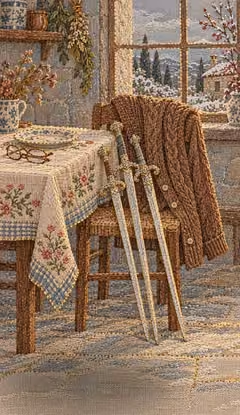
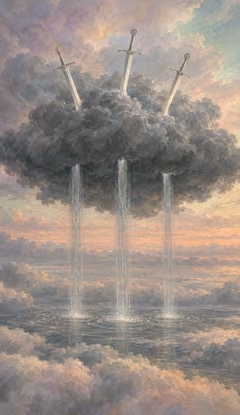
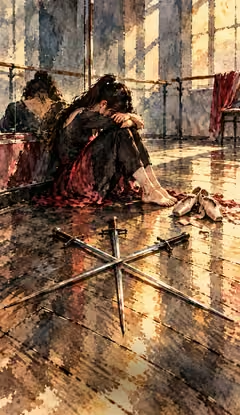
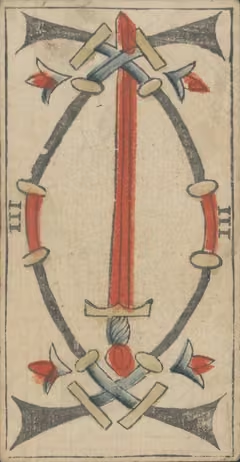
On the classic card, three swords pierce a heart, with a cloud and rain behind. This motif of the heart pierced by swords appears as early as the late fifteenth century in an old Italian deck, and it has long stood for jealousy, sorrow and breakup. This same old game inspired the scene of the Three of Swords in the most widespread tarot today.
The old title of the card is "Lord of Sorrow." Three is the number of understanding: the idea is fertilized and a triangle forms. The Threes correspond to creation and union, but in the Swords they bring disagreement and sorrow: it is hard to reconcile the needs of three people or three ideas. The Two had tried a compromise, and the Three shows that it failed: mental distress becomes too heavy to bear.
The meaning of the image is simple: separation, breakup, distance, absence, delay, division and dispersal. The card speaks of quarrels, discord, tears and sorrow. It can also mean incompatibility, aversion, loss and unrequited love. You may see in it a heart that wants something the head says is impossible, a moment of sadness or self-pity, a love triangle, a failed affair or a couple coming apart. Opposing beliefs or poor communication, very common with Swords, can also set off tears, reproaches and harsh words. More simply, it says your heart is no longer in your work or in a relationship, or that someone has hurt your feelings.
This card is dark and heavy, and an intense passion to create is held back in it. The sorrow of this card has nothing in common with that of mourning or a romantic breakup: it is a deep state of consciousness, where ordinary thought gives way to something greater than itself. Despite its darkness, the image keeps a certain calm thanks to the symmetry of its swords.
Your strengths
You can welcome pain instead of fleeing it: take it in, accept it and go beyond it. With time, acceptance and love can turn sorrow into a joyful memory and a taste for life. Grief gives a place to what you feel: it inspires a great deal of art and music, and a shared sorrow creates deep bonds and accurate insights.
What holds you back
- You push away what hurts you too much, you avoid thinking about it and seeing it again: the pain then stays with you and takes up more room.
- You may deny your jealousy or sadness, or refuse to believe a relationship is going badly.
- You may hold back from crying when the pain is there, and brood over an old wound to the point of isolating yourself.
- You may blame others for your difficulties without acknowledging your part.
What helps
- Taking the pain in and going through it with courage and love.
- Letting yourself cry: nothing beats a good cry.
- After an argument, clarifying the situation and accepting your responsibility rather than blaming the other person.
- Letting the sorrow go and beginning to heal when the swords "fall" from the heart.