א
Alef
a, or e as in “bed”, depending on the word
Value 1
Its shape breaks down into two Yods and a Vav: together, they have the value of the four-letter name.
Their shape, their name, their sound, their value, and the ones people confuse.
Hebrew is written and read from right to left.
a, or e as in “bed”, depending on the word
Value 1
Its shape breaks down into two Yods and a Vav: together, they have the value of the four-letter name.
b or v, depending on the word: the v of Gevurah is written with a Bet
Value 2
Bet (ב) is made of two strokes: a curve on top, then a flat bar beneath. The Kaf (כ), which looks like it, is made in a single stroke.
Easily confused with
כKafa hard g, as in “gate”, sometimes written gu
Value 3
Gimel (ג) is made of three strokes. The Nun (נ), which looks like it, has only two.
Easily confused with
נNunthe sound “d”, softer or harder depending on the word
Value 4
Dalet (ד) is made of two strokes: a flat bar on top, then a bar going down. The Resh (ר), which looks like it, is made in a single stroke.
Easily confused with
רReshthe sound “v”, or “o” or “oo”, depending on the word
Value 6
Vav (ו) is made in a single stroke: a Yod (י) drawn out into a long tail. The Zayin (ז), which looks like it, is said z and takes two strokes.
Easily confused with
זZayinthe sound “z”
Value 7
Zayin (ז) is made of two strokes: a squarer Yod set on top of a bar. The Vav (ו), which looks like it, is made in a single stroke.
Easily confused with
וVava rough “rh” from the back of the throat, like the “ch” in Scottish “loch”, written ch; never the “ch” of “church”
Value 8
Chet (ח) is a closed letter: both its legs join the top bar. The Hei (ה) is open. The Tav (ת), closed too, is told apart by its left leg, which ends in a small Yod.
a crisp t, snapped off by the tongue
Value 9
Tet (ט) is written t in Latin letters; the Tav (ת), duller, is written th.
i or y, as in “yes”; sometimes written j
Value 10
The Yod (י) shows up inside other letters: the Vav (ו) is a Yod with a long tail, the Zayin (ז) a squarer Yod set on a bar.
k, or a hard, throaty “rh” like the “ch” in “loch”, written kh, depending on the word
Value 20; at the end of a word, 500
Kaf (כ) is made in a single stroke; the Bet (ב), which looks like it, takes two. At the end of a word it takes the form ך: its tail reaches well below the other letters.
Easily confused with
בBetthe sound “l”
Value 30
the sound “m”
Value 40; at the end of a word, 600
At the end of a word, it changes shape and is written ם.
the sound “n”
Value 50; at the end of a word, 700
Nun (נ) is made of two strokes; the Gimel (ג), which looks like it, takes three. At the end of a word it takes the form ן: its tail reaches below the other letters.
Easily confused with
גGimelthe sound “s”
Value 60
a long o or a deep, long a, sometimes an i, depending on the word; in Latin letters, marked ’ or not written
Value 70
Ayin (ע) looks like the Tzadi (צ). The Tzadi is said ts, while the Ayin is said o or a.
Easily confused with
צTzadithe sound “p”, or “f” depending on the word, sometimes written ph
Value 80; at the end of a word, 800
It is also called Fe. At the end of a word, it changes shape and is written ף.
the sound “ts”, as in “cats”, never a plain z; written tz
Value 90; at the end of a word, 900
Tzadi (צ) looks like the Ayin (ע), which is said o or a. At the end of a word it takes the form ץ: its tail reaches below the other letters.
Easily confused with
עAyinthe sound “k”, written q
Value 100
the sound “r”
Value 200
Resh (ר) is made in a single stroke; the Dalet (ד), which looks like it, takes two.
Easily confused with
דDaletthe sound “sh”, as in “shine”, or sometimes “s”, depending on the word
Value 300
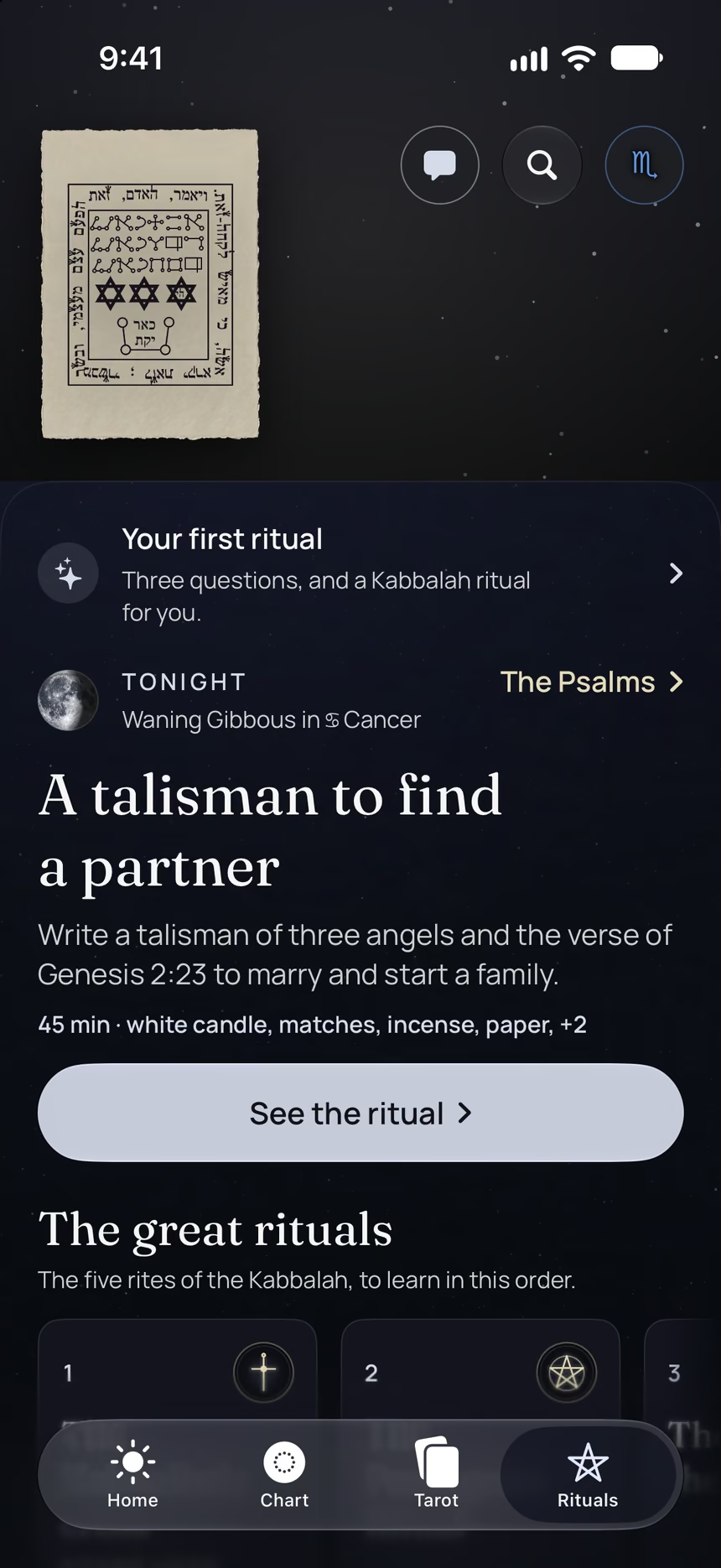
The Asteria app for iPhone
Asteria is an astrology, tarot and ritual app for iPhone.
Point your iPhone at this code.
Asteria is in free beta on iPhone. The button opens TestFlight, Apple’s app for betas: install it, then Asteria.
iPhone, iOS 26 or later
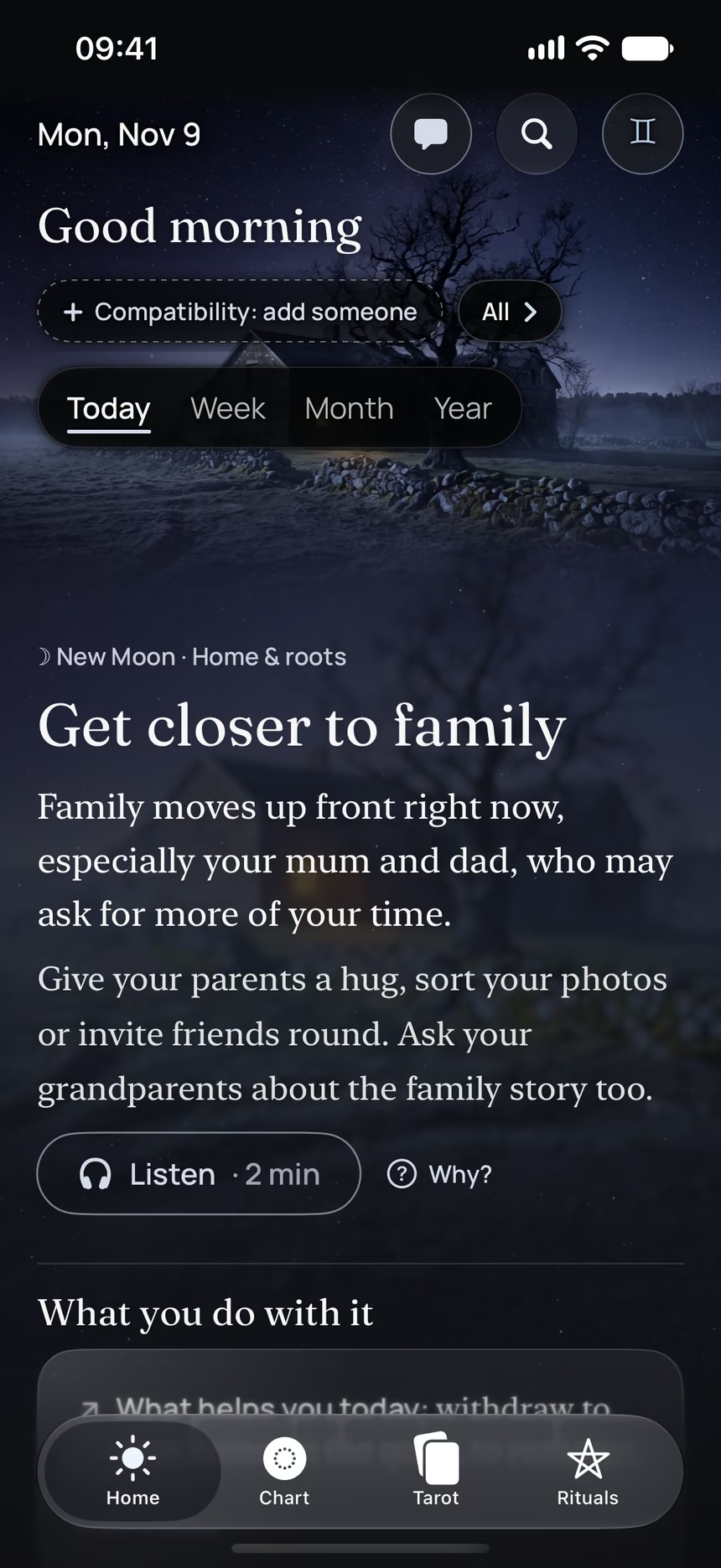 The Asteria iPhone appYour day every morning, read from your chart