North Node in the 10th House
You are very sensitive, to your own emotions as well as to other people’s.
Your North Node in House 10 shows where you grow: your career, your ambition and the role you hold in society. Your South Node, in House 4, shows where you rest on what you already know: your home, your family of origin and who you are deep down.
The lunar nodes form an axis: the South Node is what is familiar to you, the North Node is where you are headed.


- Planet
- North Node
- House
- 10th House
- The 10th house is the part of your chart that says how you show yourself in the world, what you want to accomplish in it and the place you seek there.
- Area of life
- Career & visibility
- Natural sign
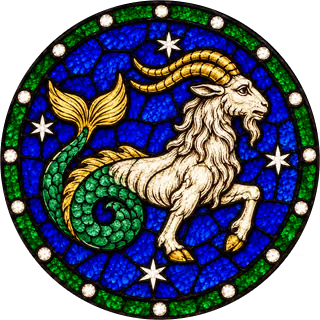
- Capricorn
- The sign with the same number in the zodiac: it speaks to the same area of life.
What it means
You need work or a career that serves the community in some way: this is how you develop your authority, your power and your sense of being useful. Yet part of you prefers to stay out of sight: you tend to withdraw, to stay at home and to shut yourself in with dark thoughts about yourself, and this tendency competes with your need to build your authority through your profession.
You are often tempted to react like a child, and your path is to mature: to get past family disagreements, to earn a role that gives you dignity, and to accept taking the place of the one who leads. You become an adult when you give your life a direction that has meaning for you and goes beyond the scattered needs of the people close to you.
You are very emotional: a movie or a sad story makes you cry, and sometimes your emotions overwhelm you to the point that you can no longer think or act, for example in the face of a loss or when your work puts you through a confrontation or a performance. You take in everything in an exchange: the words, the feelings, the gestures, and the contradictions between them. You feel responsible for other people’s moods, and you want them to be well so that you can be well yourself. You avoid anything that might stir up emotions, in yourself or in them, and you avoid making decisions for fear of causing hurt.
What you really want is a place where you feel safe, protected and cared for, a place where you belong. You are very afraid of rejection: the very idea paralyzes you, and when you believe someone has rejected you, you think it is your fault and lose sleep over it. You also have a fear of failure so strong that it keeps you from making the changes that would lead you to success. You doubt your competence, and when you lack a piece of information, you act as if you weren’t interested rather than admit it.
Still, you have a real talent for leading, because you sense what others are going through; when you take the lead, you do it without putting anyone down, and people gladly help you reach your goal. Your strength grows over the years, especially in your professional life, and with age you take things less personally. You may succeed early, but it is often in the second half of your life that you finally take a stand.
What you already have
You are used to being looked after and protected, and you still count on others to help you put your life in order. You like the security of routines: getting up, eating, coming home and going to bed at fixed times. These strengths have value; the risk is staying in them because it is easier. When you spend too much time at home, you settle in too comfortably, your life becomes a routine that spares you the outside world, and you stop progressing. When the present doesn’t make you happy, you turn to the past, regret what you didn’t do, and have less strength to act today. You find it hard to leave a situation, even when it no longer works: you hang on until there is no hope left.
Where to grow
You grow by taking your life in hand and becoming fully adult. What matters most for you is a specific goal that really counts: when you commit to it, your life gains strength, your emotions start working for you, and you earn your own respect. Without a goal, you get carried along by your moods and other people’s. You gain by approaching people with a calm authority based on self-respect rather than from need. You learn to recognize opportunities and seize them. You learn to accept credit for what you achieve: public recognition does you good and shows you that you are on the right track. When you put a cause that benefits everyone ahead of your comfort, you feel that what you are doing is right. The qualities to develop: self-mastery, an adult attitude, self-respect, keeping your eye on your goals, solving problems with common sense, keeping your commitments and promises, letting go of the past, looking after yourself, and accepting responsibility for your own success.
Your strengths
- You have a very fine empathy: you know what other people feel, and it is a gift few people have.
- You know how to lead with humanity and win people’s cooperation without hurting them.
- You encourage others to follow their dreams.
- You have dark moods, but you always pick yourself back up.
What holds you back
- You depend on others: you want to be taken care of and you look for a security that is never enough, and this is your most vulnerable point.
- You react too strongly when things don’t go your way, hoping others will change; they experience it as an attempt to control them.
- You let fear, anger, guilt and insecurity flood you, and once you are started, you can’t stop.
- You make excuses for yourself: you understand so well why people fail that you too easily accept achieving nothing, and you always believe you need more help, advice or confidence before acting.
What helps
- Setting yourself a precise, realistic goal and breaking it into small steps you know you can reach: each step you complete gives you confidence for the next.
- Keeping your word: being on time, doing what you said, being honest with others.
- When you hesitate, asking yourself whether this action will give you self-respect, whatever the result.
- When emotion rises, slowing your breathing, relaxing and recalling times when you were happy and at peace.
- Taking some distance from other people’s emotions and letting them be as they are.
- Saying frankly “I don’t know,” then going to find the information.
- Asking people directly why they reacted the way they did, and listening to their answer.
- Setting your limits in advance, calmly, and sticking to them.
- Taking time to think before answering, listening to the advice of more experienced people and following the example of those who succeed.
- Remembering your past successes, giving yourself credit for your progress and taking care of yourself with discipline.
Helpful phrases
- “I don’t direct other people; I direct what I do.”
- “When I take things in hand, it works for me.”
- “When I respect myself, I know I’m heading in the right direction.”
Careers
Management, public speaking, politics, starting a business; goal-oriented positions rather than jobs whose purpose is caring for others.
Love
You believe you need a strong person to protect you; what you need is someone who supports your personal and professional authority. When you enter a relationship out of need, it falls apart; when you take responsibility for your own happiness, it finds its proper place. If you let the other person decide everything, you lose their respect and love, but you can take back your place as an adult at any time. You don’t say what hurts you, you do too much out of fear of losing the other person, then you shut down and grow angry in silence; naming the problem early, with the aim of finding a solution that suits you both, protects your relationship. You slip too easily into the role of the mother who takes care of everyone, and you wear yourself out in it; you do better by helping the other person reach their own goals. You care a great deal about intimacy, and you learn not to seek it from people who don’t want it. You find it hard to listen; listening to the other person on purpose makes your relationships easier. The right person is drawn to you when you have found a goal and are following it.
Work
To succeed, you need to be responsible for your own part of the work. You excel as a manager, because you lead while taking into account what people feel. You can hardly stand it when your superiors lead badly; you know how it should be done, but at the last moment you give way to someone else. Asking for a promotion, or sharing what you know to improve how people are led, confirms what you know and gives you the sense of fulfilling your mission. Accepting being recognized as the one who led a project confirms your talents as an organizer and can open up positions where you use them better.
Money
Answering for yourself also means providing for your own needs. The longer you wait to take your life in hand, the harder it is to build a financial base. You sometimes turn down chances to get richer out of attachment to your security and fear of risk. When someone offers you a deal, take time to think it over and ask what would be fair.
Family
Your family asks a lot of your time, and you often feel held back, prevented from being yourself. You are torn between what you would like to do for yourself and what you know you must do for your own people, and their needs pile up. You may find yourself supporting your family or organizing it. You can show great ease in the world and remain very naive about what you feel for your family. You need to understand your family’s needs in order to feel free to have your own career. You recreate a family around you, and you are happy when you can welcome others. You wear yourself out carrying your loved ones’ problems, hoping that once their problems are solved, you can finally live your own life. Detaching from total emotional involvement helps you; you then manage your family very well, with precise goals, from a position of authority rather than need.
Friendships
After a misunderstanding, making the first move and saying you want to get closer often sets things right.
Home
Your home and your possessions matter a great deal to your sense of security, and you risk spending too much time there; if you have your own business, it is better not to set it up at home.
Meaning and inner life
Attaching yourself to a principle or a belief larger than you makes you feel protected. You sense there is a task you are made for, which involves a position of authority, a responsibility, an ideal or a truth more important than your personal life; as long as you don’t follow it, you feel unfulfilled and guilty. When you have no hold on a situation, telling yourself it has its reason for being helps you let go.