Psalm 40 each day to keep harm away
Say Psalm 40, as the Kabbalists do every day, to keep harm away.
- 10 min
- 9 steps

Why do it
To keep harm away, the Kabbalistic tradition advises saying Psalm 40 every day. It belongs to a selection of psalms that this tradition recites to guard against what does harm. Like every rite, it opens with the Kabbalistic cross, by the light of a candle.
What you need
- A candle, preferably beeswax
- Matches
How it goes
9 steps
Settle in a clean place suited to your practice. Prepare a candle, preferably beeswax, and matches.
Light the candle.
Open the ritual with the guide: the Kabbalistic cross, then the circle of the four angels that protects you.
Opening a ritualCenter yourself, then make the intention of the heart: a right prayer that comes from the heart and not from the mind. The guide leads you through it.
The intention of the heart is the condition for this ritual: without it, the ritual is only a text you read, and it has no effect.
The intention of the heartBless the Almighty with the guide, as the Jewish tradition does at the start of prayer.
The blessingSay Psalm 40, from the first verse to the last. The Kabbalists say it every day.
To sayPsalm 40
- For the Leader. A Psalm of David.
- I waited patiently for the Lord; and He inclined unto me, and heard my cry.
- He brought me up also out of the tumultuous pit, out of the miry clay; and He set my feet upon a rock, He established my goings.
- And He hath put a new song in my mouth, even praise unto our God; many shall see, and fear, and shall trust in the Lord.
- Happy is the man that hath made the Lord his trust, and hath not turned unto the arrogant, nor unto such as fall away treacherously.
- Many things hast Thou done, O Lord my God, even Thy wonderful works, and Thy thoughts toward us; there is none to be compared unto Thee! If I would declare and speak of them, they are more than can be told.
- Sacrifice and meal-offering Thou hast no delight in; mine ears hast Thou opened; burnt-offering and sin-offering hast Thou not required.
- Then said I: Lo, I am come with the roll of a book which is prescribed for me;
- I delight to do Thy will, O my God; yea, Thy law is in my inmost parts.
- I have preached righteousness in the great congregation, Lo, I did not refrain my lips; O Lord, Thou knowest.
- I have not hid Thy righteousness within my heart; I have declared Thy faithfulness and Thy salvation; I have not concealed Thy mercy and Thy truth from the great congregation.
- Thou, O Lord, wilt not withhold Thy compassions from me; let Thy mercy and Thy truth continually preserve me.
- For innumerable evils have compassed me about, mine iniquities have overtaken me, so that I am not able to look up; they are more than the hairs of my head, and my heart hath failed me.
- Be pleased, O Lord, to deliver me; O Lord, make haste to help me.
- Let them be ashamed and abashed together that seek after my soul to sweep it away; let them be turned backward and brought to confusion that delight in my hurt.
- Let them be appalled by reason of their shame that say unto me: ‘Aha, aha.’
- Let all those that seek Thee rejoice and be glad in Thee; let such as love Thy salvation say continually: ‘The Lord be magnified.’
- But, as for me, that am poor and needy, the Lord will account it unto me; Thou art my help and my deliverer; O my God, tarry not.
In Hebrew
- לַמְנַצֵּחַ לְדָוִד מִזְמוֹר׃Lamnatseakh ledavid mizmor
- קַוֺּה קִוִּיתִי יְהוָה וַיֵּט אֵלַי וַיִּשְׁמַע שַׁוְעָתִי׃Kavo kiviti Adonai vayet elai vayishma shavati
- וַיַּעֲלֵנִי מִבּוֹר שָׁאוֹן מִטִּיט הַיָּוֵן וַיָּקֶם עַל־סֶלַע רַגְלַי כּוֹנֵן אֲשֻׁרָי׃Vaya’aleni mibor shaon mitit hayaven vayakem al-sela raglai konen ashurai
- וַיִּתֵּן בְּפִי שִׁיר חָדָשׁ תְּהִלָּה לֵאלֹהֵינוּ יִרְאוּ רַבִּים וְיִירָאוּ וְיִבְטְחוּ בַּיהוָה׃Vayiten befi shir khadash tehila lelohenu yiru rabim veyirau veyivtekhu ba-Adonai
- אַשְׁרֵי הַגֶּבֶר אֲשֶׁר־שָׂם יְהֹוָה מִבְטַחוֹ וְלֹא־פָנָה אֶל־רְהָבִים וְשָׂטֵי כָזָב׃Ashre hagever asher-sam Adonai mivtakho velo-fana el-rehavim vesate khazav
- רַבּוֹת עָשִׂיתָ אַתָּה יְהוָה אֱלֹהַי נִפְלְאֹתֶיךָ וּמַחְשְׁבֹתֶיךָ אֵלֵינוּ אֵין עֲרֹךְ אֵלֶיךָ אַגִּידָה וַאֲדַבֵּרָה עָצְמוּ מִסַּפֵּר׃Rabot asita ata Adonai elohai nifle’otekha umakhshevotekha elenu en arokh elekha agida va’adabera otsmu misaper
- זֶבַח וּמִנְחָה לֹא־חָפַצְתָּ אָזְנַיִם כָּרִיתָ לִּי עוֹלָה וַחֲטָאָה לֹא שָׁאָלְתָּ׃Zevakh uminkha lo-khafatsta oznayim karita li ola vakhata’a lo sha’olta
- אָז אָמַרְתִּי הִנֵּה־בָאתִי בִּמְגִלַּת־סֵפֶר כָּתוּב עָלָי׃Az amarti hine-vati bimgilat-sefer katuv alai
- לַעֲשׂוֹת־רְצוֹנְךָ אֱלֹהַי חָפָצְתִּי וְתוֹרָתְךָ בְּתוֹךְ מֵעָי׃La’asot-retsonkha elohai khafotsti vetoratkha betokh me’ai
- בִּשַּׂרְתִּי צֶדֶק בְּקָהָל רָב הִנֵּה שְׂפָתַי לֹא אֶכְלָא יְהוָה אַתָּה יָדָעְתָּ׃Bisarti tsedek bekahal rav hine sefatai lo ekhla Adonai ata yadota
- צִדְקָתְךָ לֹא־כִסִּיתִי בְּתוֹךְ לִבִּי אֱמוּנָתְךָ וּתְשׁוּעָתְךָ אָמָרְתִּי לֹא־כִחַדְתִּי חַסְדְּךָ וַאֲמִתְּךָ לְקָהָל רָב׃Tsidkotkha lo-khisiti betokh libi emunatkha utshu’atkha amorti lo-khikhadti khasdekha va’amitekha lekahal rav
- אַתָּה יְהוָה לֹא־תִכְלָא רַחֲמֶיךָ מִמֶּנִּי חַסְדְּךָ וַאֲמִתְּךָ תָּמִיד יִצְּרוּנִי׃Ata Adonai lo-tikhla rakhamekha mimeni khasdekha va’amitekha tamid yitseruni
- כִּי אָפְפוּ־עָלַי רָעוֹת עַד־אֵין מִסְפָּר הִשִּׂיגוּנִי עֲוֺנֹתַי וְלֹא־יָכֹלְתִּי לִרְאוֹת עָצְמוּ מִשַּׂעֲרוֹת רֹאשִׁי וְלִבִּי עֲזָבָנִי׃Ki ofefu-alai raot ad-en mispar hisiguni avonotai velo-yakholti lirot otsmu misa’arot roshi velibi azavani
- רְצֵה יְהוָה לְהַצִּילֵנִי יְהוָה לְעֶזְרָתִי חוּשָׁה׃Retse Adonai lehatsileni Adonai le’ezrati khusha
- יֵבֹשׁוּ וְיַחְפְּרוּ יַחַד מְבַקְשֵׁי נַפְשִׁי לִסְפּוֹתָהּ יִסֹּגוּ אָחוֹר וְיִכָּלְמוּ חֲפֵצֵי רָעָתִי׃Yevoshu veyakhperu yakhad mevakshe nafshi lispotah yisogu akhor veyikalmu khafetse ra’ati
- יָשֹׁמּוּ עַל־עֵקֶב בָּשְׁתָּם הָאֹמְרִים לִי הֶאָח הֶאָח׃Yashomu al-ekev boshtam ha’omrim li he’akh he’akh
- יָשִׂישׂוּ וְיִשְׂמְחוּ בְּךָ כָּל־מְבַקְשֶׁיךָ יֹאמְרוּ תָמִיד יִגְדַּל יְהוָה אֹהֲבֵי תְּשׁוּעָתֶךָ׃Yasisu veyismekhu bekha kol-mevakshekha yomru tamid yigdal Adonai ohave teshu’atekha
- וַאֲנִי עָנִי וְאֶבְיוֹן אֲדֹנָי יַחֲשָׁב לִי עֶזְרָתִי וּמְפַלְטִי אַתָּה אֱלֹהַי אַל־תְּאַחַר׃Va’ani ani ve’evyon adonai yakhashav li ezrati umfalti ata elohai al-te’akhar
The reading in Latin letters follows today’s pronunciation; the four-letter name is said Adonai.
If you can, say it in Hebrew: that is preferable.
Close the ritual with the Kabbalistic cross, with the guide.
The Kabbalistic crossPut out the candle, and do not leave it burning unattended.
Put the candle away: the same one serves every ritual.
The psalm
What it is
It is a use of the psalms from Kabbalah, the Jewish mystical tradition: a whole psalm, said every day, with nothing to write, in a short rite opened by the Kabbalistic cross.
What makes it magic
The Kabbalists say Psalm 40 every day. It belongs to a selection of psalms that this tradition recites to keep harm away, and that it advises saying in Hebrew when you can. The candle lit for each rite stands for the Divine Light.
When
Whenever you like: the books give it no day and no Moon phase.
Say it every day, as the Kabbalists do.
The Asteria app for iPhone
Rituals, guided step by step
Asteria is an astrology, tarot and ritual app for iPhone.
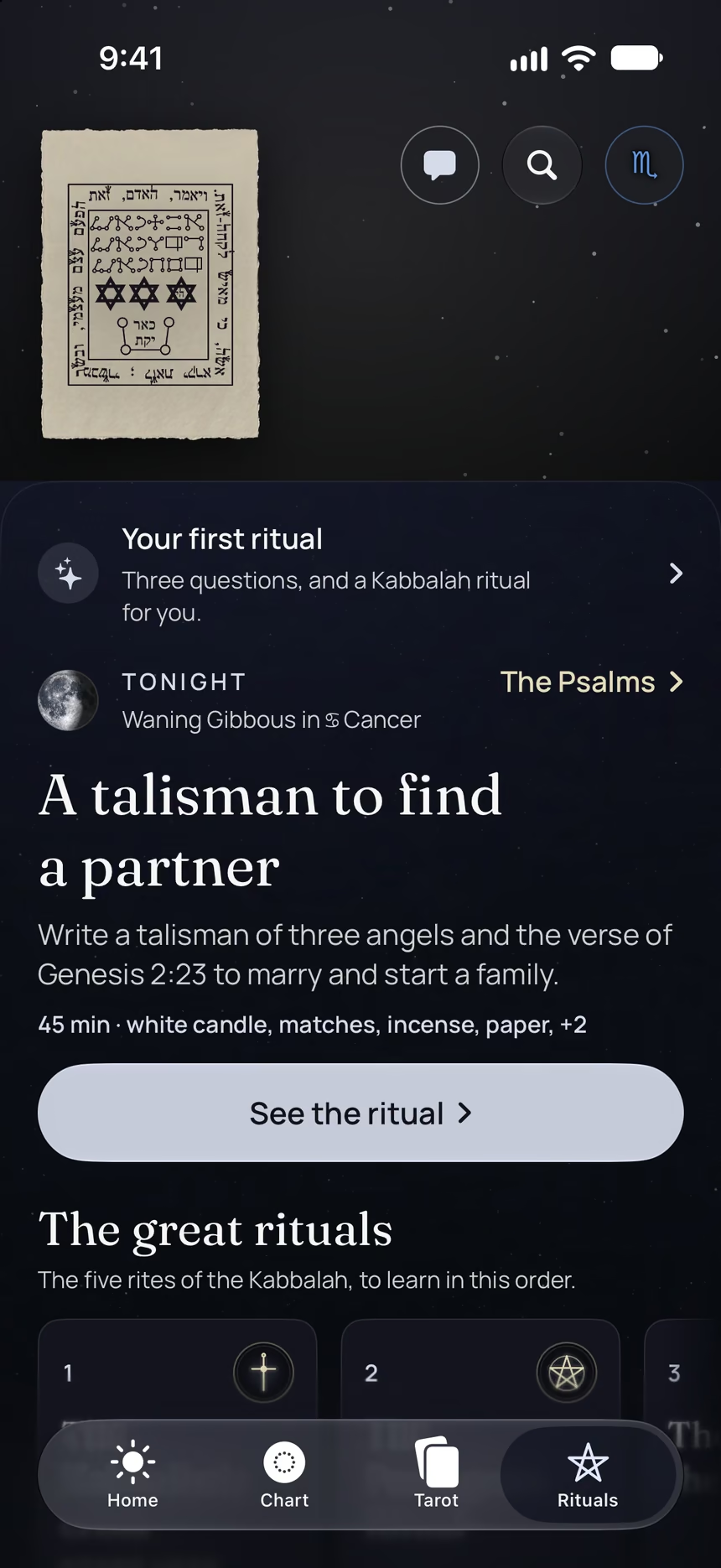
- This ritual, guided step by step by voice.
- The reading of the day.
- Your complete chart.
Point your iPhone at this code.
Asteria is in free beta on iPhone. The button opens TestFlight, Apple’s app for betas: install it, then Asteria.
iPhone, iOS 26 or later
In the same family
 12 minPsalms 144 and 145 to keep harm awaySay Psalms 144 and 145 together, with the divine name Yah, to keep harm away.
 20 minPsalms 54 and 55 to succeedSay psalms 54 and 55 one after the other, several times, in a place of worship, when you want to succeed at something important.
 15 minSpeak with confidence at an interviewSay a verse from Exodus seven times in the morning to speak with ease at your job interview.
 20 minEight verses to find your wordsSay eight verses of Psalm 119 eleven times when speaking is truly hard for you, or before an important decision.
 15 minBe helped in a new jobSay a verse from Exodus seven times, morning and evening, so your colleagues help you in your new position.
 15 minThree psalms after losing a jobSay Psalms 41, 42 and 43, three times a day for three days, if you have lost your job.