Venus quincunx Saturn
You feel loaded with too many responsibilities, and sometimes you feel responsible for other people’s happiness.
A quincunx links two planets placed in signs that share neither element nor mode: they get along poorly, and this aspect asks a lot of adjustment from you.
A quincunx is when two planets are 150 degrees apart: they have almost nothing in common and rub against each other without seeing each other.

- Aspect
- Quincunx
- A quincunx is when two planets are 150 degrees apart: they have almost nothing in common and rub against each other without seeing each other.
- Angle
- 150°
- The distance between the two planets, in degrees around the chart.
- Planet
- Venus
- In a chart, Venus is your way of loving, giving and pleasing, and what you find beautiful and precious.
- Planet
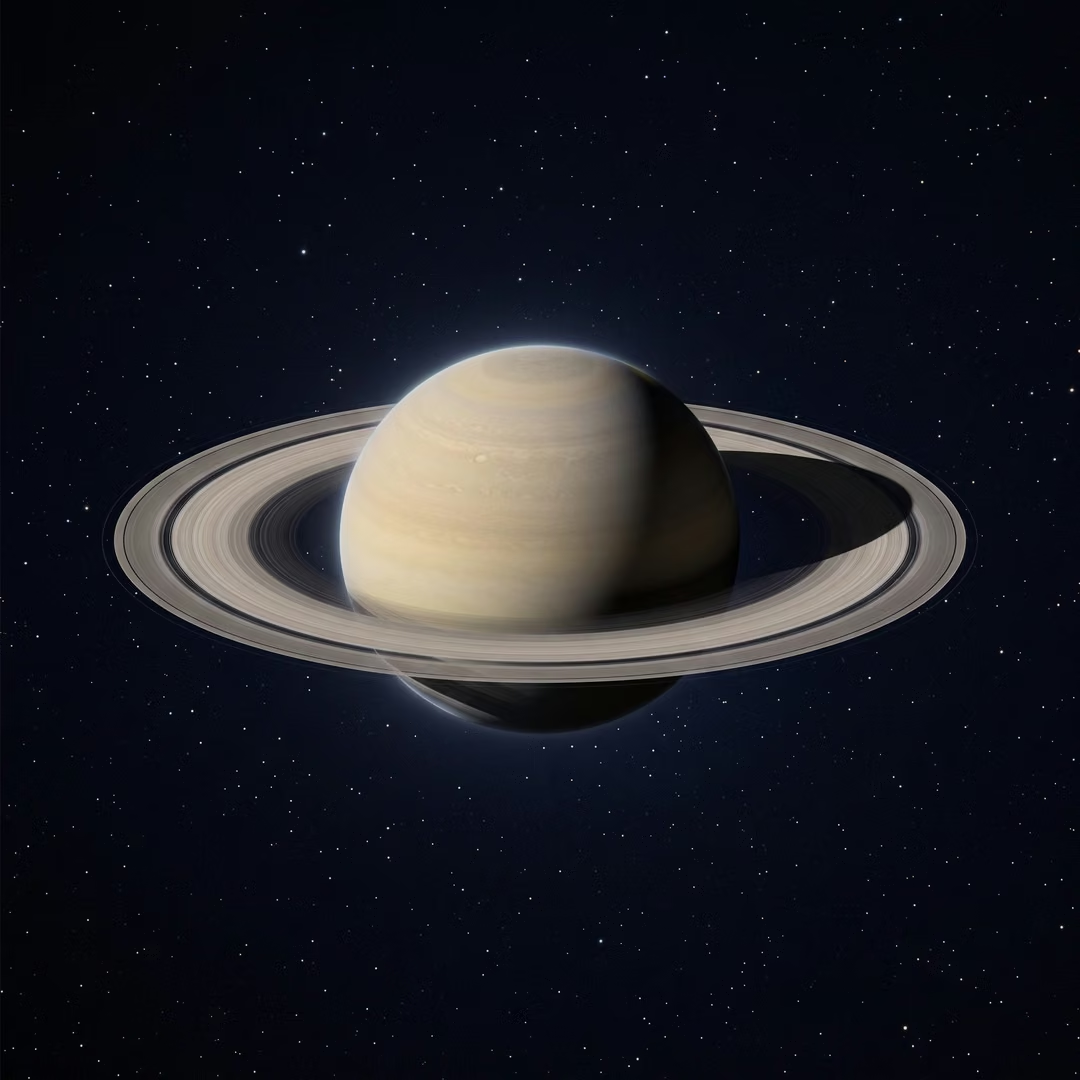
- Saturn
- Saturn is the part of your chart that sets limits, rules and duties, and that asks for time and effort.
What it means
You feel that others are constantly expecting something from you. You want everyone to approve of you and appreciate you, and to get there, you give of yourself. You try to make yourself indispensable to those you love, always ready to offer your time or your money, and that is how you keep control of the relationship.
Deep down, you don’t love yourself enough. You often feel unloved, and for a long time you believe it is others who don’t care for you; sometimes it takes you years to understand that the real question is the worth you give yourself. You take things, and yourself, far too seriously.
In your work, you are serious and responsible, and you often work harder than your colleagues. This drive often makes up for your fear of being rejected in love, and you then try to shine in a career that involves you little personally.
In love, you are afraid: often, you don’t really believe love is there for you, and when it is, you fear it will fade. You almost expect rejection, and it takes you a very long time to feel secure in a relationship and to believe you have truly won the other person’s affection. You often long for cuddles, kisses and tender gestures, and yet you feel uncomfortable giving affection, and even more receiving it. Showing your affection becomes a very serious matter for you. Time matters a great deal to you: you show someone you care for them by giving them your time, and you measure their affection by the time they devote to you. You tend to believe that in a couple, one person loves and the other is loved, and you have to learn that it is less simple. It takes you time to learn to give and receive, especially without expecting anything in return.
As a child, you often received little affection, especially not from your father. You often saw him as a man who didn’t value himself, who wasn’t loved or who didn’t receive tenderness. Your mother may have been more affectionate, but her affection came with conditions, control and discipline. The lack of time, and with it the lack of affection, often weighed on your childhood. You often lack confidence in your femininity, partly because of the loneliness of your childhood and your father’s lack of physical tenderness.
Your strengths
- You have great capacity for success: you can earn a lot of money and achieve a lot in your career, especially when you value yourself more.
- You are flexible enough to find your place in many professional fields.
- If you focus your efforts on specific goals, you can be much admired.
- You can hold on over time, stay through hard moments and truly make a relationship work.
- You have a sense of reality in love: you know the work it takes for a relationship to last, and your relationships go better once the early attraction and illusions have passed.
- Because you know pain and above all loneliness, you can give a great deal of love to others.
- With time, you often understand love deeply, and you can even become a real specialist in love and sexuality.
What holds you back
- You feel you deserve to be used, because you don’t love yourself enough.
- You believe more is expected of you than you are really asked, you take it on anyway, then you resent others.
- You watch for the slightest sign that the other person loves you less, you ask for proof and for words about how they feel, and you apologize constantly: it weighs heavily on your couple.
- You sometimes protect yourself so well that nobody can get near you, then complain that nobody loves you.
- You can give up on any relationship by acting as if it didn’t matter, or stay a long time in an unhappy relationship because looking for better frightens you too much and that pain, at least, you know.
What helps
- Reminding yourself that you owe others only tolerance and respect, and that you owe yourself far more: not letting yourself be intimidated, knowing your worth, carrying only what serves your interests.
- Taking stock of your priorities and answering your own needs first; there will be time afterward to look after others.
- Putting at the service of your talents the intensity you used to give to others.
- Refusing to let the person you love treat you as anything less than an equal; otherwise, your love affairs can become a burden.
- Using the times you are alone to learn something new or develop what you already do well.
- Dividing your time and energy better between love and work, to make room for both: you get real satisfaction from it.
- Facing your need for a relationship and your fear of a relationship.
- Working at your relationship over time: that is how you find out that love is also made for pleasure.
Love
Out of fear, you may be more cautious and protect yourself more, without necessarily loving less when circumstances allow.
Depending on the rest of your chart
- If Venus and Saturn are in signs of elements that don’t get along (the usual case for a quincunx): the irritation is constant, it holds back the expression of both planets, and the aspect can weigh heavily in your life.
- If Venus and Saturn are in signs of elements that get along (quincunx straddling two signs, for example 1° Aries and 29° Leo): the aspect is weakened.